
Tarok has three ground rules for the tricks and one bidding phase. This chapter explains them step by step.
The Trick
In a trick, each player plays one card. One player leads, which means they play the first card, face up, to the middle of the table. Each other player adds one card of their own to the middle, and the strongest card wins them all. The winner gathers the played cards into a face-down pile in front of them, their captured pile, and leads the next trick.
The strongest card is the highest card of the suit that was led, unless a Tarok was played: then the highest Tarok wins. At the end of the hand, the cards in your captured pile count for your Card Points.
The Three Ground Rules
Three rules decide which card you may play to a trick. The first two, the Color Rule and the Tarok Rule, hold in every game in this book, and a chapter says so where one contract changes them. Only if you have neither the led suit nor any Taroks may you play whatever you like.
The third rule, the Rising Rule, is switched on only in some contracts. In a positive contract you try to capture Card Points, and every Card Point helps you. In a negative contract you try to win no tricks, or a fixed small number of tricks. The Rising Rule is on in every negative contract, and each game chapter names any other contract where it is on.
Where the Rising Rule is on, it works together with the first two rules. You must still follow suit, and if you cannot, you must still play a Tarok. Among the cards that these two rules allow, you must play one that beats the highest card on the table whenever you can.
Many other rules differ from group to group, so ask about the house rules when you join a new group. The glossary at the back gives the native names of the third rule, the Rising Rule.
| Rule | When it applies | What you must do |
|---|---|---|
| Color Rule | A suit is led and you hold a card of it. The same goes for the Tarok suit. | You must follow suit. If Hearts are led and you hold a Hearts card, you must play one; if a Tarok is led and you hold one, you must play a Tarok. |
| Tarok Rule | You are void in the led suit, which means that you hold no cards of it. | You must play a Tarok. You don’t have to win the trick, but you may not play another color suit. |
| Rising Rule | The contract switches this rule on, as every negative contract does, and then it binds every player. | If you can beat the highest card on the table, you must. |
Here are four example tricks. In each one, four players play one card each, shown from left to right; the leftmost card is the one that was led, and the ringed card wins. In the last example the player who leads also wins the trick.
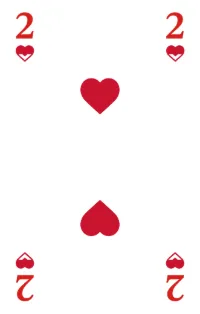 P1 leads
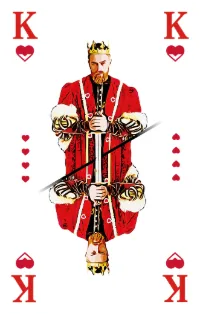 P2
Wins
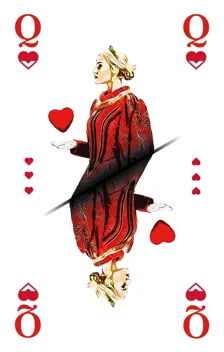 P3
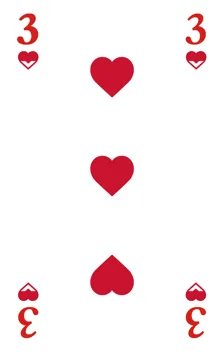 P4
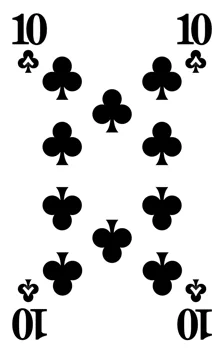 P1 leads
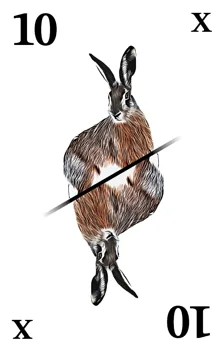 P2
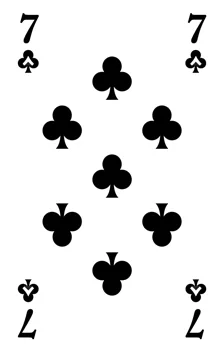 P3
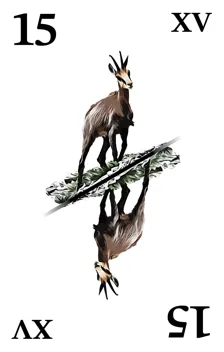 P4
Wins
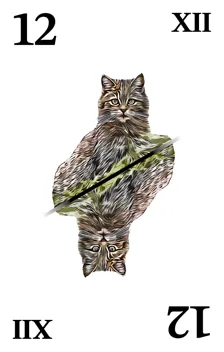 P1 leads
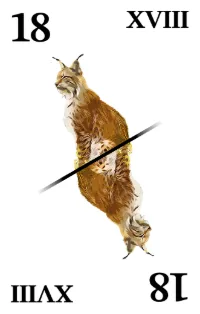 P2
 P3
Wins
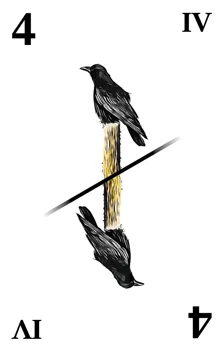 P4
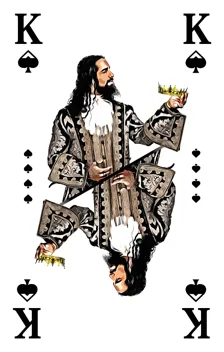 P1 leads
Wins
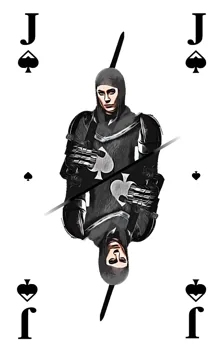 P2
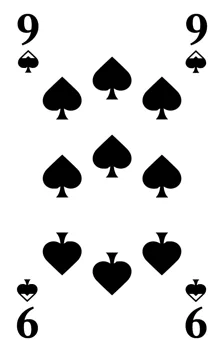 P3
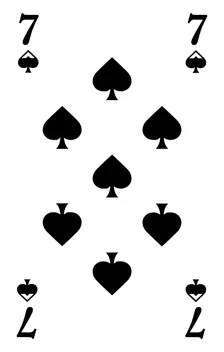 P4
The Fairy Tale Trick
The rule for the strongest card has one exception, the Fairy Tale Trick. If the three Trull cards (Skus, Moon and Pagat) all fall in the same trick, the Pagat wins it. Some games in this book play without the Fairy Tale Trick, and each of them says so in its chapter. The Fairy Tale Trick is also called the Emperor’s Trick. A group that does not want it may switch it off as a house rule. Groups often change rules in this way, and the “Expansions” at the end of each game chapter list rules that some groups add.
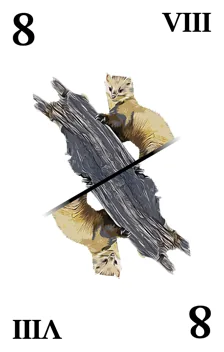 P1 leads
P2
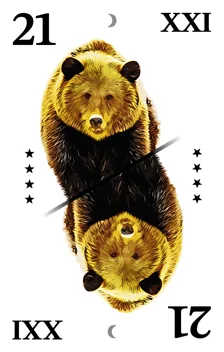 P3
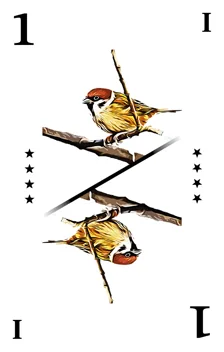 P4
Wins
The Talon
Some games don’t deal all the cards but put packets of cards face-down in the middle of the table, and some contracts can use them. These cards are the talon. Where a game has a talon, its chapter explains it.
The Table
You will meet four names in nearly every chapter: Dealer, Forehand, Declarer and Defenders. In most games the Forehand bids first; each game chapter says who does. The Forehand usually leads the first trick, even when another player is the Declarer; each chapter tells you who leads. In some contracts the Declarer plays alone against the other players; in others a secret Partner joins the Declarer.
| Role | Who this is |
|---|---|
| Dealer | The Dealer shuffles and deals the cards. |
| Forehand | The Forehand is the first player after the Dealer in the direction of play. |
| Declarer | The Declarer is the player who wins the bidding. |
| Defenders | The Defenders are all the players who play against the Declarer’s side. |
Bidding
Every hand of Tarok begins with the bidding. A bid is your answer to one question: What can I do with this hand?
You do not bid on how good your cards are. You choose a Contract: a goal that you promise to reach, and you choose the one that fits your cards.
Besides the positive and negative contracts (see “The Three Ground Rules”), some games have other kinds of contract; where a game has them, its chapter explains them.
In most games the contracts form a ladder from the lowest to the highest, and the players bid in turn. On your turn you either name a higher contract or pass.
In most games the bidding goes on until nobody bids higher, and the player who owns the highest bid is the Declarer.
The contract decides whether the Declarer plays alone or with a Partner, what the goal is, and how many Victory Points the hand is worth. The contracts and the bidding rules differ from game to game, and each game chapter explains its own.
Your guided first game If you’re unsure about bidding and how it works, use the play-along online to guide you through the process. elsteinergames.com/start20
Standing
Half of the games in this book have a right called standing. Each new bid must be higher than the last. Standing is the exception: when someone raises over you and your turn comes around again, you may say “I hold” and take the raised contract for yourself. You can only use this if you have not passed. Where a game has standing, its chapter explains who may use it.
A First Trick, Step by Step
Here is an example trick. The Declarer plays alone against three players. The Declarer leads the Q♠ and the others play in seating order. We number the others 2, 3 and 4.
- Player 2 holds Spades and must follow suit (Color Rule). They play the 8♠.
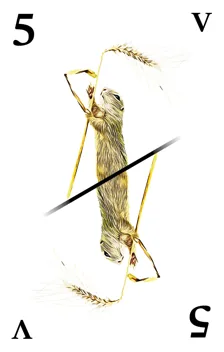
- Player 3 has no Spades, so they must play a Tarok (Tarok Rule). They choose the V.
- Player 4 holds Spades and follows with the K♠.
Player 3 wins the trick, because any Tarok beats any color card. Everyone now knows that Player 3 is void in Spades, and the Declarer has lost a Queen to the Defenders.
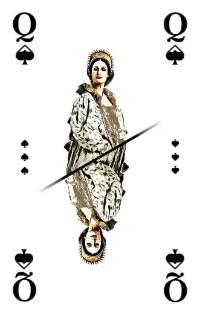 Declarer leads
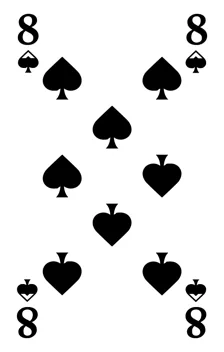 Player 2
 Player 3
Wins
Player 4
Feeding your friend. Player 3’s V had already won the trick when Player 4 played the K♠. Players 3 and 4 are both Defenders, so the four pips of the King go into their shared pile. When your side has already won a trick, you should play a card with many pips into it. We call it buttering the trick. It is also a way for secret Partners to show each other that they are on the same side.
(For the full ranking within each suit, flip back to the “Meet the Deck” chapter.)
Bonuses and Announcements
Bonuses are extra feats that score on top of the contract. Bonuses are scored regardless of who won the contract. There are two kinds of bonus. Hand bonuses are for cards that were dealt to you, for example all three Trull cards in one hand. Table bonuses are earned in play: for the cards that you captured through tricks (for example capturing all four Kings), or for something you do in play, such as the Pagat Ultimo: winning the last trick with the Pagat. Each chapter tells you what bonuses apply in their respective game.
Almost every bonus can be scored in two ways. If you achieve it silently, you score its lower value. If you announce it, which means you declare the bonus aloud, it is worth double. What happens when an announced bonus fails differs from game to game, and each game chapter explains it and gives the values. The bonus tables in this book show both values, the silent one and the announced one, wherever a bonus has both.
The time for announcements is after the contracts are settled and right before the first trick is played. It ends when the first trick is led.
Kontra
A Kontra is a call that the Defenders may make: if you believe that the Declarer will not deliver the contract, you may say “Kontra”. After a Kontra the contract is worth double the Victory Points, whoever wins the hand. Kontra is not part of every game; where a game has it, its chapter explains it. Practice puzzles on Kontra are online at elsteinergames.com.
Quick Summary
These are the main words of this chapter. Know them, and the rest of the book is easier to read:
| The word | What it means |
|---|---|
| Trick | Each player plays a card, the strongest one wins. |
| Contract | A contract is the goal that you promise to deliver this hand. |
| Forehand | The Forehand is the first player after the Dealer in the direction of play. |
| Declarer | The Declarer is the player who wins the bidding and must deliver the contract. |
| Secret Partner | In some games a secret Partner joins the Declarer and is not one of the Defenders. |
| Defenders | The Defenders are all the players who play against the Declarer’s side. |
| Standing | When someone raises over you and your turn comes around again, you may say “I hold” and take the raised contract for yourself. |
| Talon | The talon is made of the face-down cards that some games put in the middle of the table. |
| Bonus | A bonus is an extra feat that scores on top of the contract. |
| Announcement | Announcing a bonus means that you promise to deliver it, and an announced bonus is worth double. |
| Kontra | The Defenders make this call, and it doubles the value of the contract. |
Scoring
When all cards have been played, the players count their Card Points. The pips are printed on the cards: Kings and Trull cards carry 4 pips each, Queens 3, Cavaliers 2 and Jacks 1, and every other card carries none (see “Card Values” in “Meet the Deck”, Card Values).
Every game counts Card Points in two steps. First, count your captured cards: that gives your base count. The base count differs from game to game. Then add up the pips in your captured cards: that is your pip count, and it is counted the same way in every game. Your base count and your pip count together are your Card Points. If the hand was played in teams, teammates count their Card Points together.
The pip carriers
4
4
4
4
4
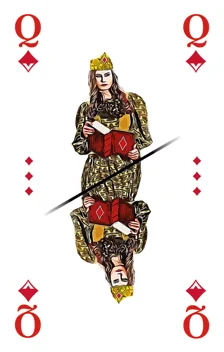 3
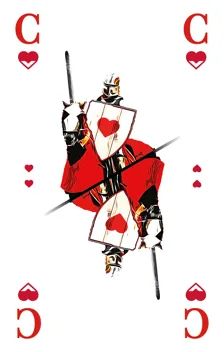 2
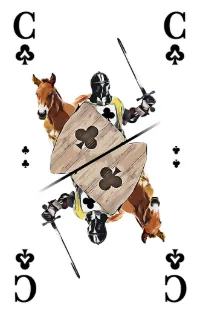 2
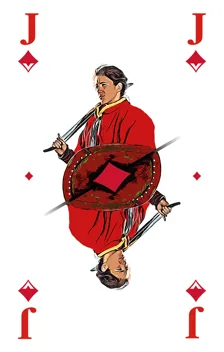 1
The rest of the pile

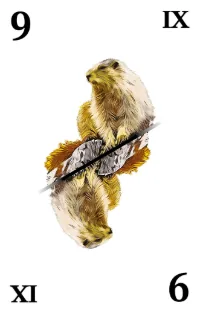
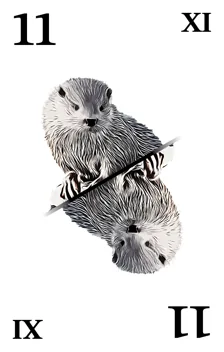
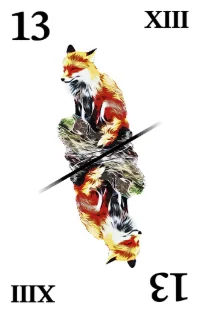
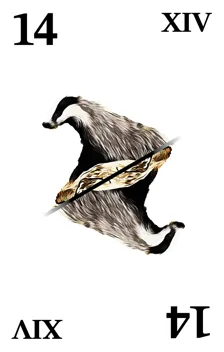
Eighteen more cards, the Taroks II to XIX, carry no pips.
The count
- base count 27 cards, divided by three 9
- pips 28
- Card Points 37
A won contract has a value, and so does each bonus. These values are the Victory Points, and they go on the score sheet.
Keeping score. Before the first deal, appoint a scribe: one player who keeps the score sheet for the whole group. The sheet has a column for each player, and after each hand the scribe adds the Victory Points that were scored. This book uses Simplified Scoring: there are no debts, and no player pays another. Each game chapter explains how its score is kept. Printable score sheets for every game are online.
| Line | Anna | Ben | Clara | Dora |
|---|---|---|---|---|
| 1 Declarer Anna Contract Call Kontra Announced | ||||
| Contract | +1 | +1 | empty | empty |
| Bonus | +1 | +1 | empty | empty |
| Round VP | +2 | +2 | empty | empty |
| Total | 2 | 2 | 0 | 0 |
| 2 Declarer Dora Contract Solo Kontra Announced | ||||
| Contract | +4 | +4 | +4 | empty |
| Bonus | empty | empty | empty | +1 |
| Round VP | +4 | +4 | +4 | +1 |
| Total | 6 | 6 | 4 | 1 |
Etiquette
Here are a few customs to agree on before you play:
- Your hand stays your secret. Give no hints, sighs or raised eyebrows about what you hold, and no advice to other players mid-hand.
- Secret Partners stay secret. When a called card makes someone your hidden teammate, the partnership is revealed only through the play: never with words, nods or grins.
- Tricks stay face down. Once a trick is gathered, only the most recent one may be looked at again.
- Broken rules cost Victory Points. If a rule is broken, on purpose or by accident, the group may agree a forfeit: the offending side scores nothing that hand. Agree how you handle it before you play, because the games themselves do not.