
The Cards
Calling the Twenty is played by four players with a trimmed deck. Before play begins, we set aside 14 cards:
- the Taroks II and III
- Hearts and Diamonds: 2, 3 and 4
- Clubs and Spades: 7, 8 and 9
What remains are 40 cards: 20 Taroks (Skus, XXI down to IV, and the Pagat) and five cards in each color suit. Four of these color cards, the empty four (1♥, 1♦, 10♣ and 10♠), are worth no Card Points.
Tip: with only five cards of each color suit in play, the game is easy to track.
The Preparation
The Dealer shuffles. The player opposite the Dealer cuts the deck (lift the top half, set it underneath). The Dealer deals the cards clockwise: five cards per player, then five again. There is no talon; every card is in someone’s hand. After each hand, the deal passes to the left.
The player to the left of the Dealer is the Forehand.
 P1
Forehand
P2
cuts
P3
P4
Dealer
The Bidding
Before anyone plays a card, the players choose the contract for the hand: the goal one player promises to deliver (see “Core Concepts”, Bidding). The contracts form a ladder from lowest to highest, and each bid names a contract higher than the one before it.
The Forehand has the lowest contract, the Call, from the start, without naming it. It stays the Forehand’s contract until someone bids higher, unless the Forehand opens with a higher contract instead, when the hand matches one. Which hand matches which contract is shown under “Should you claim it?”, below.
Everybody else can either pass or name a higher contract. The Forehand has one more choice: when another player has bid, the Forehand may say “I hold” (see “Core Concepts”, Standing) and take that bid for themselves instead of naming a higher contract; the other player then bids higher or passes. In this game only the Forehand may say “I hold.” A player who passes is out of the bidding for the rest of the hand. Bidding goes around to the left, skipping anyone already out, until one player is left in. That player is the Declarer, and plays the contract they last named or held.
If everyone else passes and no one names a contract above the Call, it stays with the Forehand, who then makes the final choice: play the Call, raise to a higher contract on the ladder, or declare the Dodge Round (below). Whichever they choose, the Forehand is the Declarer. In the base rules, every hand is played out.
When the bidding ends, the Declarer’s contract is fixed. In the Call, the Forehand then names the XX (below). After that the players make their announcements (Trull, Pagat Ultimo), and then the first card is led.
The contracts and bonuses in this chapter are a basic set. No two groups play Calling the Twenty exactly alike, and you are meant to build on this set. “Expansions”, at the end of this chapter, lists rules that some groups add. gotarok.com/41 has more ideas, and the beginner score sheet at gotarok.com/43 has blank lines for the contracts you want to add.
| Contract | VP | Leads |
|---|---|---|
| The base contracts | ||
| The Call | 1 | Forehand |
| You call a secret Partner, and the two of you must capture more than 44 of the 88 Card Points. | ||
| No-Trump Farberl |
4 | Forehand |
| You play without a Partner, the Taroks play as a plain suit, and you need 45 Card Points. | ||
| Solo | 4 | Forehand |
| You play without a Partner, the Taroks are trumps, and you need 45 Card Points. | ||
| Valat (announced) | 12 | Forehand |
| You play alone and must win every single trick of the hand. | ||
| Forehand only after everyone passes | ||
| Dodge Round Trischaken |
5 | Forehand |
| Everyone plays alone, and the player who captures the most Card Points loses. | ||
Calling the Twenty
In the Call, the Forehand does not play alone; they choose a secret Partner.
If the Forehand holds the XX, they call the highest Tarok below it that they lack, down to the XVI: holding the XX and the XIX, for example, they call the XVIII. If they hold all five Taroks from the XX down to the XVI, nobody is left to call, and the Forehand must play a Solo instead.
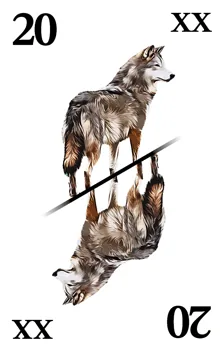
Over the course of the hand, the partnership becomes visible: watch who plays cards worth many Card Points into the Forehand’s tricks and who plays against them (see “Core Concepts”, A First Trick, Step by Step).
The Contracts
The Call
This is a positive contract, 2 against 2. The Forehand calls a secret Partner. Both sides try to capture Card Points; the calling side needs more than 44 of the 88 to win. At 44 to 44 Card Points, the calling side loses.
Solo
This is a positive contract, 1 against 3: the Declarer plays without a Partner. The soloist must reach 45 Card Points.
No-Trump Farberl
You play this contract 1 against 3, and the soloist needs 45 Card Points. The Taroks lose their trump power and play as an ordinary fifth suit. Nothing trumps anything: the highest card of the led suit takes the trick, every trick. The Tarok Rule is off: if you are void in the led color suit, you must play a card of another color suit, and you may play a Tarok to a color lead only when you hold no color card at all. While you hold any color card, you must lead a color card.
Valat
You announce Valat in the bidding as a contract of its own. You promise to win every trick, alone against the other three players, with the Taroks as trumps. If you succeed, you add 12 Victory Points; if you lose even one trick, each Defender adds 12 Victory Points instead. In a Valat the bonuses score as usual.
Dodge Round Trischaken
Everyone plays alone, the Taroks are trumps, and each player tries to capture as few Card Points as possible. The Rising Rule is on (see “Core Concepts”, The Three Ground Rules), and no bonus is scored. The player who captures the most Card Points loses, and every other player adds 5 Victory Points. If two or more players tie for the most, all of them lose. Classic Zwanzigerrufen has no Dodge Round, and this book adds it, as some variants do.
Should you claim it?
Before you name a bid, look at the hand in front of you.
Start by giving your hand a single score, then choose your bid by that number. The Trull pieces (the Skus, the XXI and the Pagat) are Taroks too, so they are counted here as the Taroks they are, and they add nothing more to this count.
| Card | Count |
|---|---|
| each Tarok below the XV | 1 |
| each big Tarok, the XV and up | 2 |
| each King | 1 |
Add it all together, and read the bids below against that total.
| Contract | Claim it when you hold |
|---|---|
| The Call | a count of 9 or more; the secret Partner brings the rest |
| No-Trump | five sure no-trump winners, Kings and Queens with real length behind them, Taroks few or none |
| Solo | a count of 12, the Skus and the XXI |
| Dodge Round | only small cards, no big Taroks and no Kings, and the other three have all passed |
Partner budget, in the Call only: you can expect three tricks from your called XX, but you should count on two.
A lone King. a lone King is worth about half a trick here; 51% of the time somebody can trump it.
A sure no-trump winner is a color card that no other player can beat in its suit. The King of a color suit is one. A lower card is one only when you also hold every higher card of that suit: the Queen with the King, the Cavalier with the King and the Queen. In No-Trump nothing trumps these cards, so each of them takes the trick when its suit is led. The Forehand leads the first trick in No-Trump too. If you are not the Forehand, you can lead your winners only after you have won a trick. Until then you must play a color card whenever you are void in the led color suit, and that card may be one of your winners. That is why the table asks for length behind your Kings and Queens.
Bonuses and Announcements
Before the first card is led, there are two announcements:
The Trull. If one player holds all three Trull cards (Skus, Moon (XXI) and Pagat (I)), they must declare it: “Trull!”
Pagat Ultimo. A player holding the Pagat (I) may announce the intention to win the last trick with it. An announced Pagat Ultimo has failed when the Pagat is beaten in the last trick or is played before the last trick, even when the Color Rule or the Tarok Rule forces it out; the opposing side then adds 2 Victory Points. In No-Trump the Trull is the only bonus that scores: nobody may announce Pagat Ultimo, and neither the Pagat in the last trick nor a surprise Valat adds Victory Points.
Bonuses are scored regardless of who won the contract.
| Bonus | Victory Points |
|---|---|
| Trull, declared | Each player on the holder’s side adds 1 Victory Point. |
| Pagat Ultimo, silent | Each player on the side that won the last trick with the Pagat adds 1 Victory Point. |
| Pagat Ultimo, announced and made | Each player on the announcer’s side adds 2 Victory Points. |
| Pagat Ultimo, announced and failed | Each player on the opposing side adds 2 Victory Points. |
| surprise Valat | When a side wins all ten tricks without having announced Valat, each player on that side adds 6 Victory Points. |
Playing the Hand
The Forehand starts the first trick unless the contract says something else.
Scoring the Hand
If the contract scores from the value of the tricks rather than the number of tricks, this is how you count Card Points (see “Core Concepts”, Scoring). After the last trick in the Call, the Partner and the Forehand pool their tricks, and the two Defenders pool theirs. When one player plays alone against three, the three Defenders pool their tricks. Then each side counts, in two steps:
- Step one: count your captured cards. This is your base count: every captured card counts 1 Card Point, with four small exceptions: the empty four (1♥, 1♦, 10♣ and 10♠) count nothing. Set them aside first, then count the rest. They are easy to spot: each is the only number card its suit kept, so any card that is neither a face card nor a Tarok is empty.
- Step two: add the pips. That is your pip count. Together the two counts are your Card Points.
How to count
The cards that leave the count

The pip carriers
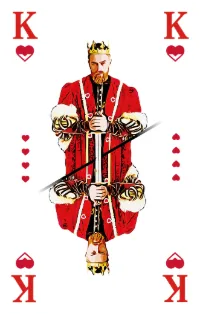 4
 4
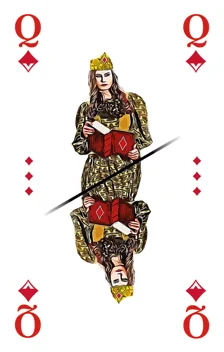 3
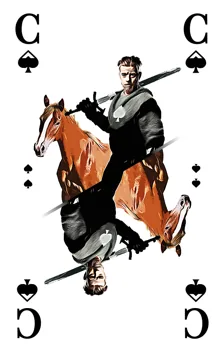 2
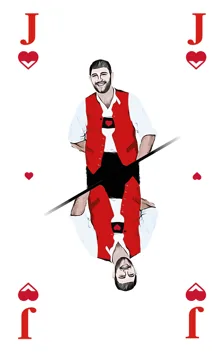 1
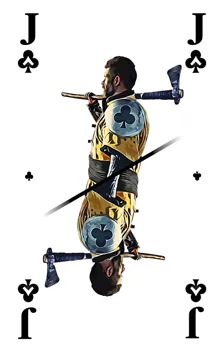 1
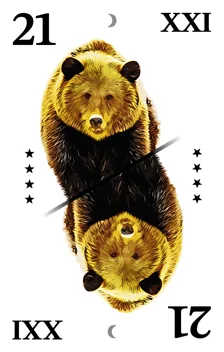 4
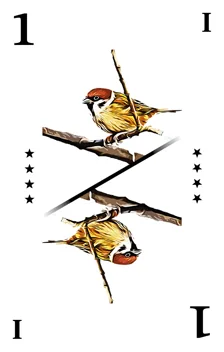 4
The empty four, 1♥ 1♦ 10♣ 10♠, count nothing: set them aside as you count.
The count
- the base 23 cards × 1 23
- pips among them + 23
- of 88 in the deck 46
Victory Points. The rule this book scores by is Simplified Scoring (see “Core Concepts”, Scoring). In this game winners score and losers score nothing. If your side wins the hand, each of you adds the contract’s Victory Points to your total. Nobody ever subtracts.
The evening ends with the round in which someone reaches 30 Victory Points. A round is four hands, one deal by each player, so everyone has dealt equally; the highest total wins. If you run out of time first, play one last round, and the highest total wins.
More for this game, online. gotarok.com/40